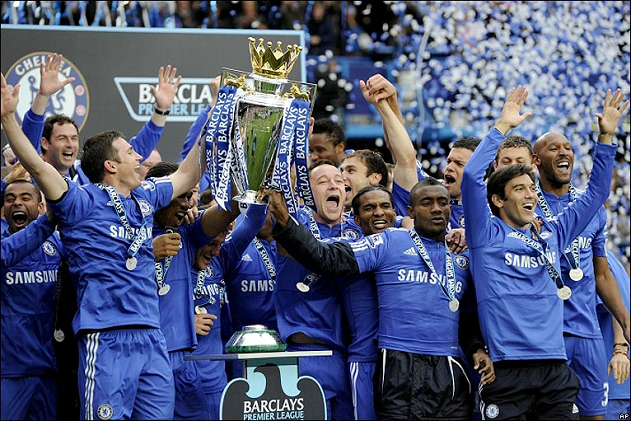
Backing the draw in football markets requires an objective analysis of tactical symmetry, risk-averse managerial strategies, and situational match incentives. While recreational market volume heavily concentrates on binary win outcomes, the draw frequently represents the most mispriced proposition on the 1X2 board due to public reluctance to wager on shared points. The 2009–2010 Premier League season produced numerous fixtures where tactical stalemate was the mathematically expected outcome rather than an accidental anomaly. Novice analysts who learn to isolate the precise conditions that suppress offensive risk can methodically uncover high-value draw opportunities that standard predictive models routinely overlook.
Tactical Symmetry and Mutual Offensive Neutralization
A high probability of a draw emerges when two competing tactical structures directly cancel each other out across the primary areas of the pitch. In 2009–2010, clashes between disciplined mid-table sides deploying identical 4-4-2 or 4-5-1 formations often resulted in congested central midfields where neither side could establish numerical superiority. When both managers prioritize positional containment over dynamic forward runs, transition speed decelerates significantly. This tactical gridlock restricts the majority of ball circulation to low-danger areas between the penalty boxes, drastically reducing total shot volume and keeping the scoreline level.
The Dynamics of Mirrored Low-Block Formations
When two defensive units execute deep low blocks simultaneously, neither side commits sufficient numbers forward to exploit spatial gaps in transition. Both backlines remain securely organized inside their own defensive third, forcing opposing attackers to rely on low-percentage long-range efforts or heavily contested crosses. Because both coaching setups deliberately avoid leaving space behind their central defenders, the underlying expected goal generation of the contest collapses, creating the ideal environment for 0–0 and 1–1 outcomes.
Strategic Risk Aversion in Direct Mid-Table Clashes
Mid-table fixtures in the 2009–2010 campaign regularly featured scenarios where avoiding defeat provided far greater strategic utility to both clubs than aggressively chasing three points. Teams hovering near safety recognized that a single point maintained distance from the relegation zone without exposing their backlines to catastrophic counter-attacks. Deconstructing the specific structural matchups that routinely produced shared points clarifies why draw selection must be rooted in situational game management.
Birmingham City vs. Stoke City: Direct physical aerial duels and disciplined set-piece containment consistently neutralized open-play creation, resulting in low-event deadlocks.
Blackburn Rovers vs. Fulham: Methodical zonal structures and aggressive central challenges throttled fluid passing sequences, keeping the scoreline level across ninety minutes.
Aston Villa vs. Everton: Tactically disciplined mid-blocks cancelled out vertical counter-attacking avenues, producing competitive, low-margin scorelines between European contenders.
Wolverhampton Wanderers vs. Sunderland: Deep defensive lines and cautious fullback deployment prioritized defensive stability over transition volume, leading to frequent stalemates.
These recurring matchups prove that high draw frequency is an active consequence of mutual defensive prioritization rather than random finishing variance. When neither manager is willing to adjust tactical substitutions to open up the pitch late in the second half, the game naturally settles into a low-risk equilibrium. Bettors who identify this mutual conservatism can secure substantial pricing value on draw lines that the public routinely ignores.
Asymmetric Incentive Structures and the Acceptance of Shared Points
Analyzing the league table context is critical because late-game incentives fundamentally dictate whether a manager will risk conceding to chase a victory. In 2009–2010, the dynamic between a favored team playing away from home and a resilient host frequently reached a tipping point around the 70th minute where both sides accepted a draw as an optimal outcome.
Match Context Profile
Structural Tactical Stance
Risk-Tolerance Level (Final 20 Mins)
Empirical Betting Outcome
Upper Mid-Table vs. European Contender
Compact mid-block containment vs. cautious possession
Extremely Low (Preserve status quo)
Substantial value on level-score full-time lines
Relegation Six-Pointer in Spring
High-intensity physical fouling, deep defensive drop
Minimal (Avoid catastrophic defeat)
Frequent 0–0 and 1–1 scoreline clustering
Elite Away Favorite vs. Rigid Low Block
Possession cycling on perimeter vs. penalty-box crowding
Moderate for favorite, Zero for host
High incidence of low-scoring stalemate upsets
Non-Rivalry Mid-Table Clashes with Secured Safety
Passive territorial sharing, low pressing cadence
Low (Minimal physical overextension)
Elevated draw probability outperforming market odds
The table above illustrates how competitive context overrides abstract talent ratings when determining the likelihood of a draw. When the downside of conceding a late goal vastly outweighs the reward of securing an additional two points, managers actively instruct their squads to protect the current score. Recognizing these psychological and tactical pivot points allows analysts to project stalemates with exceptional precision.
The Role of Scoreline Preservation in Late-Game Transitions
When a match remains tied entering the final fifteen minutes, tactical behavior changes drastically compared to the opening half. In 2009–2010, managers in balanced contests routinely substituted attacking wide players for defensive central midfielders or additional center-backs to solidify spatial protection. This deliberate tactical deceleration drains attacking momentum from both sides, transforming competitive fixtures into low-risk preservation exercises that heavily favor the draw.
Provided that an analytical model detects strong tactical symmetry and mutual low-risk incentives before kickoff, validating market line stability through an innovative betting destination ensures that value remains uncompromised. Tracking real-time price movements on ufabet auto allows disciplined analysts to confirm whether smart money is quietly accumulating on the draw before public wagering forces defensive total prices down.
Fragility Points That Invalidate Theoretical Draw Projections
Projecting a draw carries notable operational risks when individual defensive discipline breaks down under sudden structural pressure. During 2009–2010, early red cards, contentious penalty awards, or defensive errors from set pieces immediately dismantled carefully constructed low-event game plans. Once a defending team is forced to chase a deficit, the tactical stalemate evaporates instantly, forcing the game to open up into a chaotic transition battle that invalidates pre-match draw models.
In the event that extensive match handicapping fails to identify viable draw pricing due to extreme market efficiency across domestic fixtures, exploring probability-driven mathematical structures within a casino online offers an instructive parallel in evaluating pure statistical variance without the erratic influence of refereeing interventions.
Bankroll Discipline When Targeting High-Odds Level Outcomes
Wagering systematically on draws requires a robust psychological approach and specialized bankroll management to accommodate the lower strike rates inherent in high-odds pricing. Because draw prices generally sit above the 3.00 threshold, extended dry runs are mathematically expected even when backing positive-expected-value lines. Implementing strict flat-staking or fractional Kelly models ensures that a bettor’s bankroll withstands natural variance until the mathematical edge of selective draw handicapping asserts itself over a full season.
Summary
Successfully identifying high-probability draw matches in the 2009–2010 Premier League required analyzing tactical symmetry, mutual low-risk incentives, and the psychological willingness of both managers to settle for a point. Stalemates in elite football are systematically produced by mirrored defensive systems, spatial congestion, and late-game risk aversion. By isolating matchups where neither side possesses the incentive or structural capability to break a deadlock, disciplined bettors can exploit persistent public market biases and extract consistent value from draw pricing.